Refuge is an installation consisting of a large shelter made of found textile, edition of cyanotypes and silkscreen prints, ambient sounds, and collection of oral histories recorded in different cities beginning in summer 2025. The installation references provisional spaces used as emergency refuge by people displaced by climate disaster as well as repurposed public spaces—often libraries—used by urban dwellers when extremely hot or cold temperatures make it dangerous to be outdoors or remain at home.

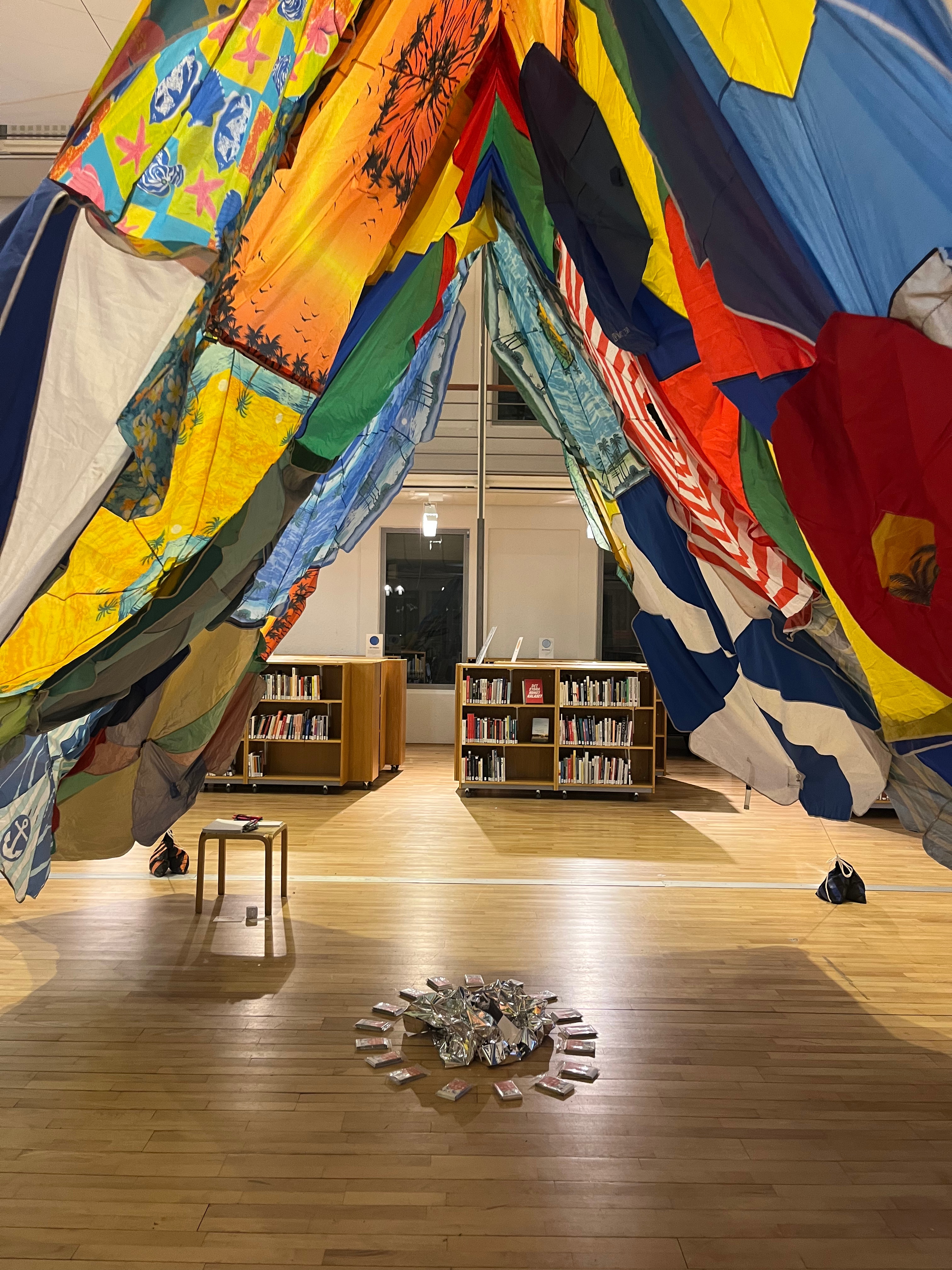
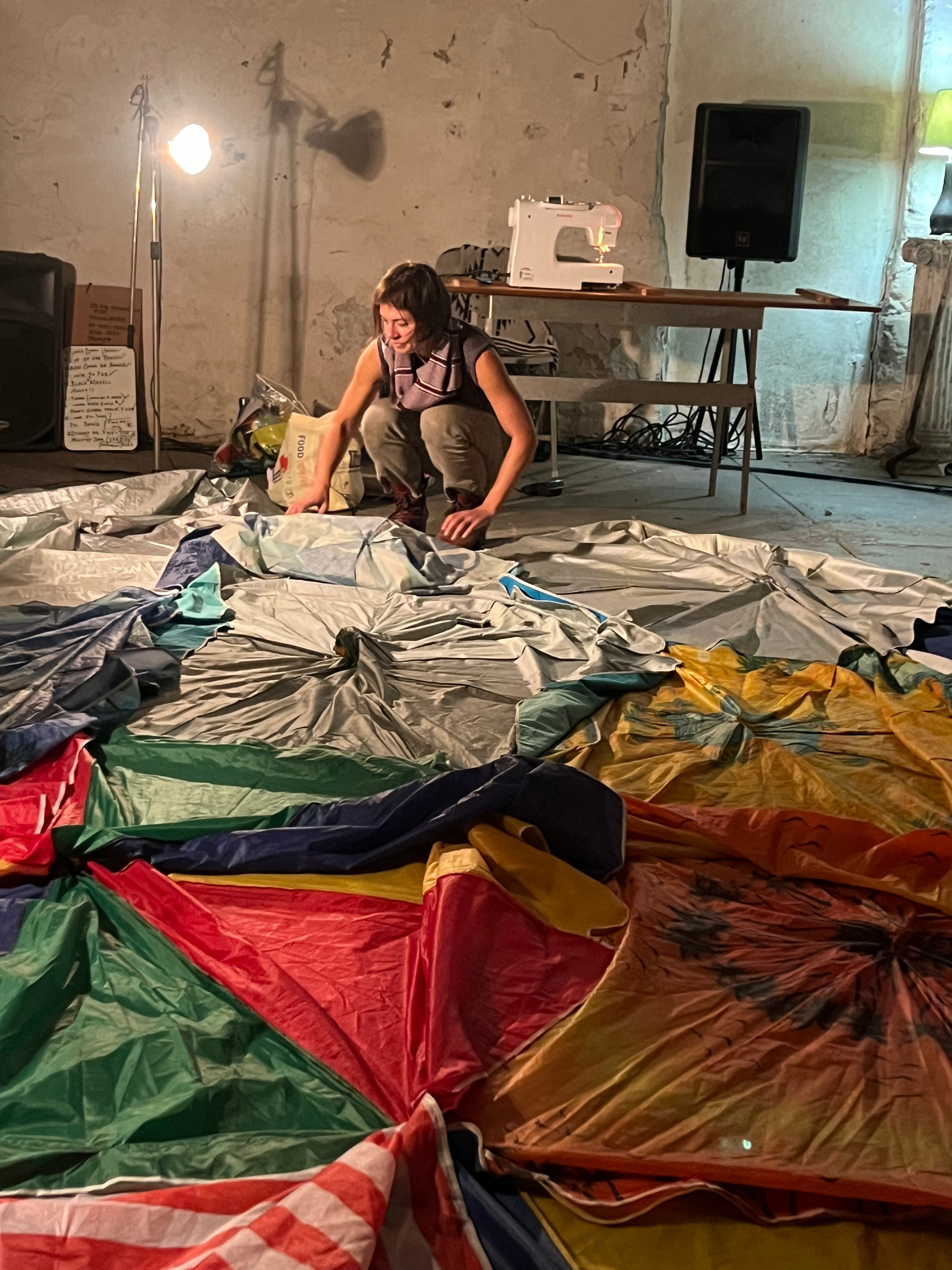
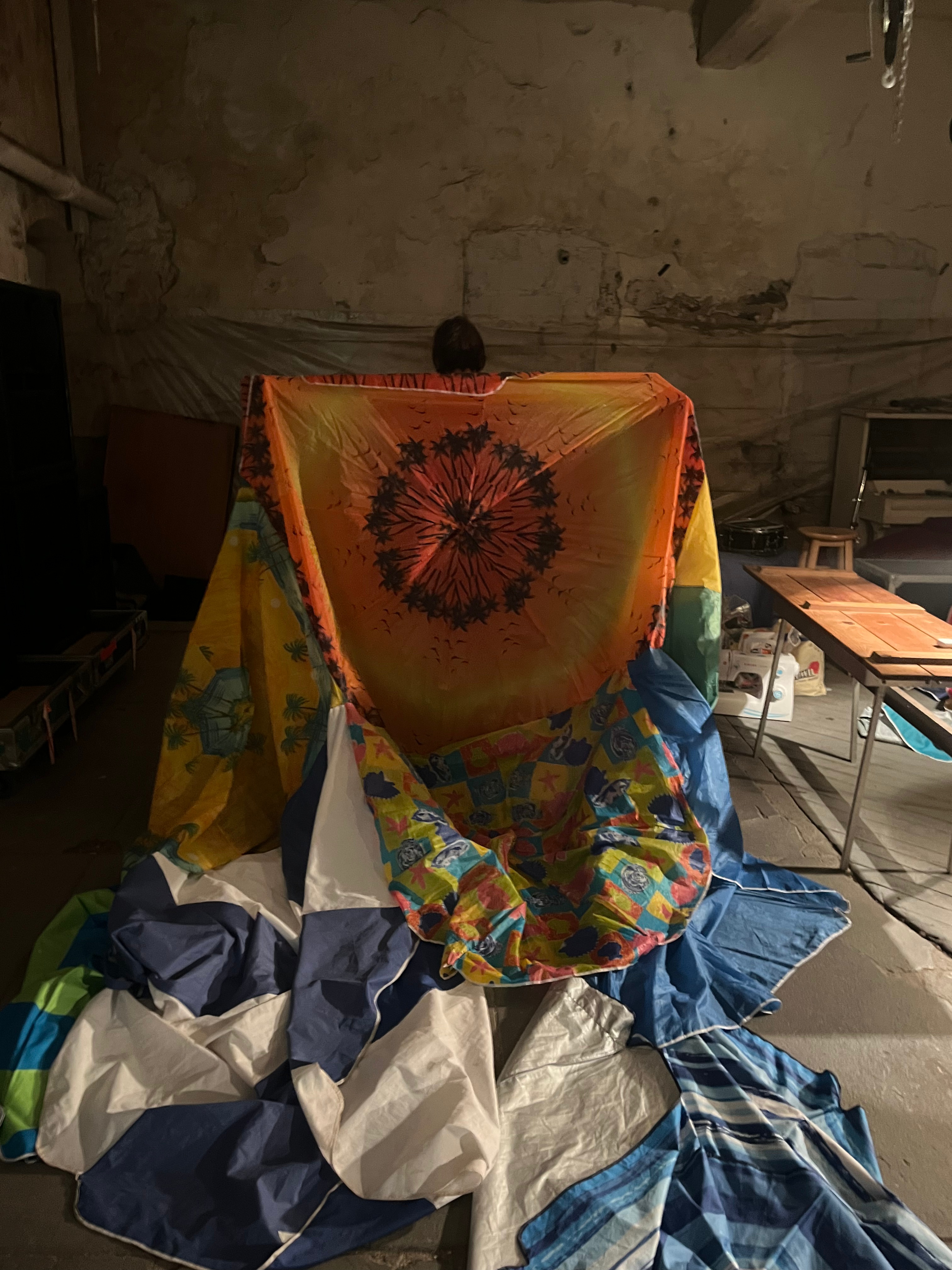
Both displacement and haven are signified by the term Refuge, from the Latin “refugium” meaning, simultaneously, to flee and return.
Refuge can also be a form of social infrastructure. People who shelter together can explore methods for coping with eco-anxiety and grief. Through embodied interactions with each other and more-than-human-species, we can also change thermic and emotional conditions.
A Story
Last Sunday, I was in the YMCA locker room getting ready to go to the pool (it was raining) and I ran into Sonya, a swimmer I know a little and whom I had seen the day before when I was leaving the beach. I said hello and that we seemed to be having the same watery weekend. I asked her if she swam all year outdoors. She said she usually tried to make it until her birthday, which is next week, but that she’d been feeling really cold this year and hadn’t actually swam the day before, she’d just come and hung out.
And she said, I know it’s weird but I think it’s because of a coat. When she was a teenager she needed a new winter coat and went with her father to a department store and fell in love with one the way teenagers do. The coat was slim cut and her father said it was impractical because she wouldn’t be able to wear a sweater under it and would be cold. She described the coat to me. It had buttons and an elegantly curved lapel and was blue. She pleaded and convinced her father and got the coat and froze all winter.
That coat, she said. I think about it all the time. I thought about it on the beach yesterday when I couldn’t get into the water.
I got pretty excited—not because she didn’t get to swim or because she spent a cold winter underdressed—but because I have a theory and the beginnings of an embodied research project about somatic memory and its entanglement with climate trauma.
My theory is that there might be a difference between FEELING cold and BEING cold. And the same goes for heat.
Everyone in this room has likely had a time in their life when they experienced extreme heat or cold as a personal emergency. I believe we accumulate these emergencies in our body as trauma. And when we find ourselves (again) in an extremely hot or cold environment–or, as empathic humans concerned about the climate crisis, when we read or hear about extreme heat and cold emergencies that impact others–our traumas are activated and amplified. I wonder what will happen if we don’t release them. If they accrue and we keep getting more and more sensitive just as the world keeps getting more and more extreme.
My hope is that we can find methods to release these traumas, maybe by sharing them, or finding a safe place to discard them. Like a refuge.
 nora.almeida